AI Agents Leave the Lab: How SMEs Move from Pilot to Production
40 percent of all enterprise applications are expected to include AI agents by end of 2026 — yet many mid-sized companies remain stuck in the pilot phase. What separates businesses that have made the leap, and what the path from proof of concept to a production system looks like.
Just a year ago, AI agents were widely considered an enterprise experiment, out of reach for most mid-sized companies. That picture has changed fundamentally: analysts project that by end of 2026, around 40 percent of all enterprise applications will include task-specific AI agents — up from less than 5 percent in 2025. The technology has left the lab.
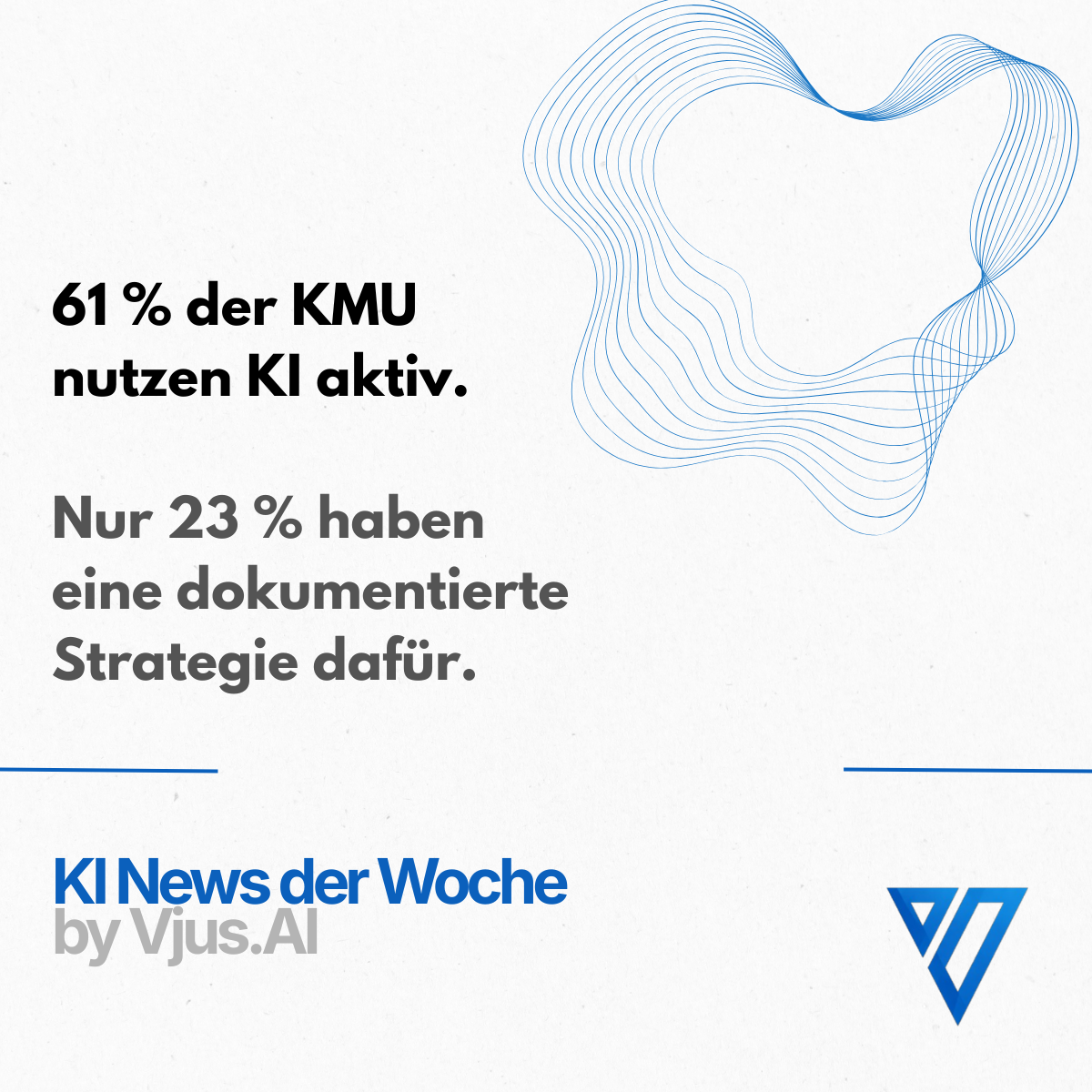
What this means in practice is visible in a July 2026 survey by Pax8: 61 percent of SMBs are actively using AI — yet only 23 percent have a documented AI policy. The question is no longer whether, but how mid-sized companies move from proof of concept to a production system.
Chatbot or agent — a critical distinction
Many businesses underestimate how fundamentally an AI agent differs from a classic chatbot. A chatbot answers questions. An agent receives a goal, plans the necessary steps autonomously and executes them across existing systems — from email inbox to CRM to ERP.
- Chatbot: reacts to inputs — Agent: acts autonomously toward a defined goal
- Chatbot: provides answers — Agent: opens tickets, writes emails, updates database records
- Chatbot: single conversation — Agent: coordinates multiple systems simultaneously
- Agents require clear boundaries: defined processes, access controls and an escalation model
Which processes deliver value for SMEs today
Practice shows that agents deliver the fastest results when processes have clear inputs and outputs and occur frequently enough. A useful benchmark: at least 20 to 50 similar cases per month. Where mid-sized companies typically start with AI-driven process automation:
- Quote processing: Incoming PDF requests are automatically read, assessed and logged in the CRM — typical time savings of 85 to 90 percent per task
- Lead qualification: Agent researches company data, checks ICP fit and writes a structured summary for the sales team
- Email triage: Incoming requests are sorted by priority and responsibility, forwarded with a draft response
- Reporting: Agent pulls data from multiple systems, summarizes key figures and sends weekly reports automatically
- Document extraction: Invoices, delivery notes or contracts are parsed and transferred to accounting or ERP systems
Why so many companies stay stuck in the pilot phase
The Pax8 July 2026 survey consistently identifies two factors separating successful from stalled companies: leadership accountability and governance. Among active AI users, 91 percent report clear leadership alignment — among those still experimenting, only 68 percent do. The difference is rarely the technology, but the structure. An external technology assessment often helps establish the right framework.
- No ownership: without a named project lead, no one makes decisions — the project stalls indefinitely
- Unclear process boundaries: agents need precisely defined triggers, steps and escalation paths — vague requirements lead to unreliable results
- No monitoring: without logging and quality checks, it is impossible to assess whether the agent is acting correctly
- Missing integration: an agent that only runs in an isolated tool delivers only partial results and creates new maintenance overhead
From pilot to production in three steps
No pilot project becomes productive by itself. Three steps have proven reliable in practice:
- Step 1 — Process audit: choose a process with clear rules, high frequency and measurable outcomes. Document every step before automating — missing process documentation is the most common reason AI projects fail.
- Step 2 — Controlled launch: start the agent in draft mode — it prepares results, a human reviews and approves. Move to full automation only after stable quality over two to four weeks.
- Step 3 — Operations and scaling: define quality metrics (error rate, turnaround time), set up an alerting system, then scale to additional processes.
Companies that run AI agents in production almost always have clearer processes — not more technology.