What the AI Wave in Gaming Teaches Mid-Sized Businesses
By 2028, half of new Steam games could use AI — a study of 53,000 games shows that volume alone does not guarantee success. What SMEs can learn from the gaming trend for their own software projects.
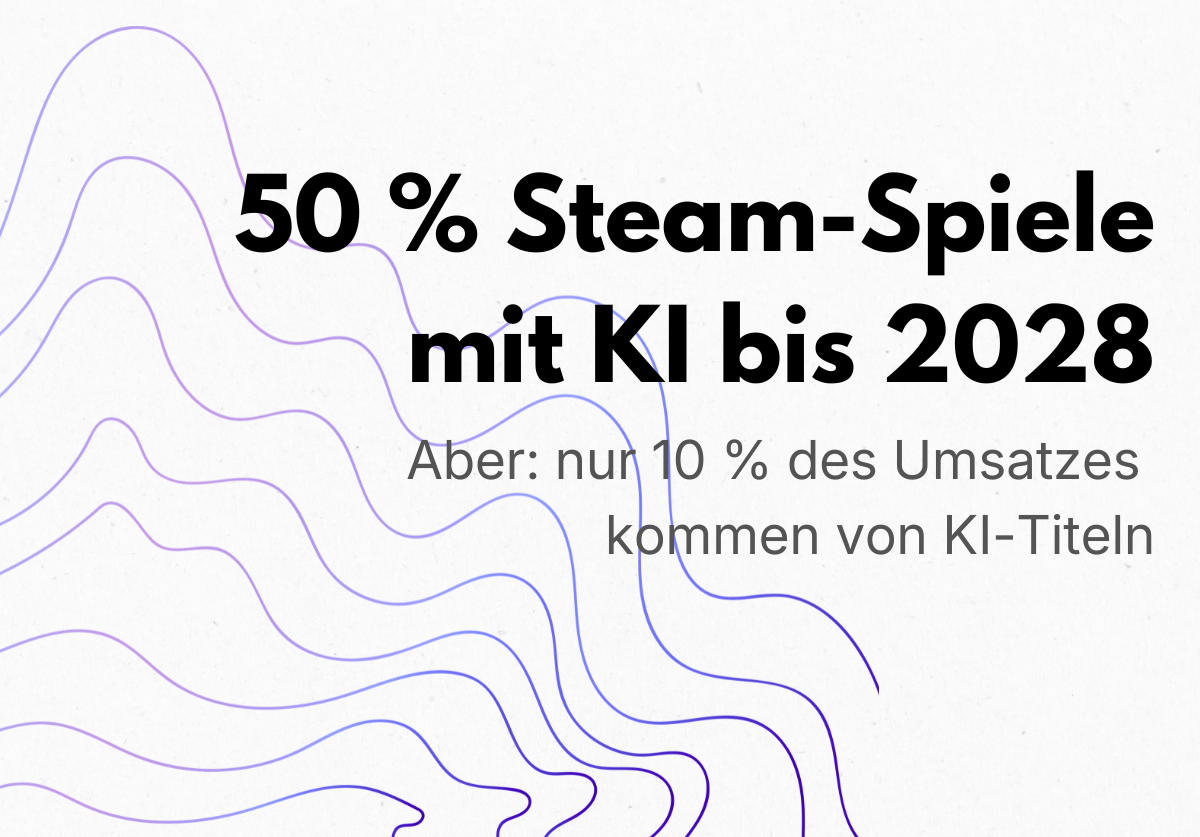
By 2028, half of all new Steam games could be using artificial intelligence — according to an analysis by game developer Sulka Haro (CEO Mainframe Industries), who studied 53,597 Steam releases between 2023 and 2026. While this sounds like a gaming headline, it carries a meaningful signal for mid-sized businesses: the gaming industry is showing in real time where AI-assisted development leads — and what volume alone cannot deliver.
Since Valve introduced mandatory AI disclosures in early 2024, AI-labeled new releases surged from approximately 13 to 530 games per month. Between 60 and 90 percent of all Steam release growth now comes from AI titles. For decision-makers at SMEs considering AI integration and automation, this carries an important message — but one that is more nuanced than the headline numbers suggest.
What the Numbers Really Tell Us
Haro did not analyze quality judgments, but disclosures: developers voluntarily declare whether they used generative AI — for graphics, audio, localization, or code. This produces an adoption curve that rises steeply: by mid-2026, roughly 33 percent of all new Steam games carry an AI label, compared to approximately 7 percent when the disclosure mandate began in early 2024. The growth is real — but the commercial picture puts it in perspective immediately.
AI titles account for 33 percent of releases but generated only around 10 percent of revenue in Q2 2026. The top one percent of all games — AI or not — captures 94 percent of total revenue. The median game with reviews earns roughly $300, regardless of AI use. Volume and commercial success diverge sharply.
Concept and Depth of Use Are Decisive
Successful AI titles in Haro's data share one trait: they use AI across multiple modalities — voice output (in 24 percent of successful titles), localization (18 percent) — combined with a well-developed concept. Failed productions, by contrast, relied almost exclusively on AI-generated visuals (72 percent mention image or art AI). A pattern that reaches far beyond gaming: using AI as a shortcut without a sound underlying concept produces output — but no measurable added value.
Using more AI alone does not make a product more successful. What matters is whether the underlying concept holds — and whether AI is applied in the right places.
What This Means for Your Next Software Project
The gaming study makes no case against AI — quite the opposite. It shows that AI tools can genuinely reduce development costs and lower the barrier to starting new projects. For SMEs looking to commission custom software or digitize existing processes: AI can meaningfully reduce development time and costs. But it does not replace a sound concept, a clear user perspective, or professional execution.
- AI lowers the barrier to starting software projects — use this for faster prototyping and cheaper iteration cycles.
- Volume growth means more offerings in the market, not automatically better outcomes — concept and target audience remain decisive.
- Multimodal AI use (text, voice, workflow automation) consistently outperforms the isolated use of individual tools.
- Assess which development steps in your next project are suited for AI support — and seek strategic guidance for that decision.
- More AI-driven output demands clearer quality standards: the bar for real impact has not dropped, only the bar for getting started.
The barrier to starting has dropped — but the bar for real business value has not. Those who understand this can use AI integration as a genuine lever rather than an illusion of quick results. Talk to us about the concrete options for your next project.