The New Shopping Street Is Called ChatGPT: How AI Is Changing Brand and Product Discovery
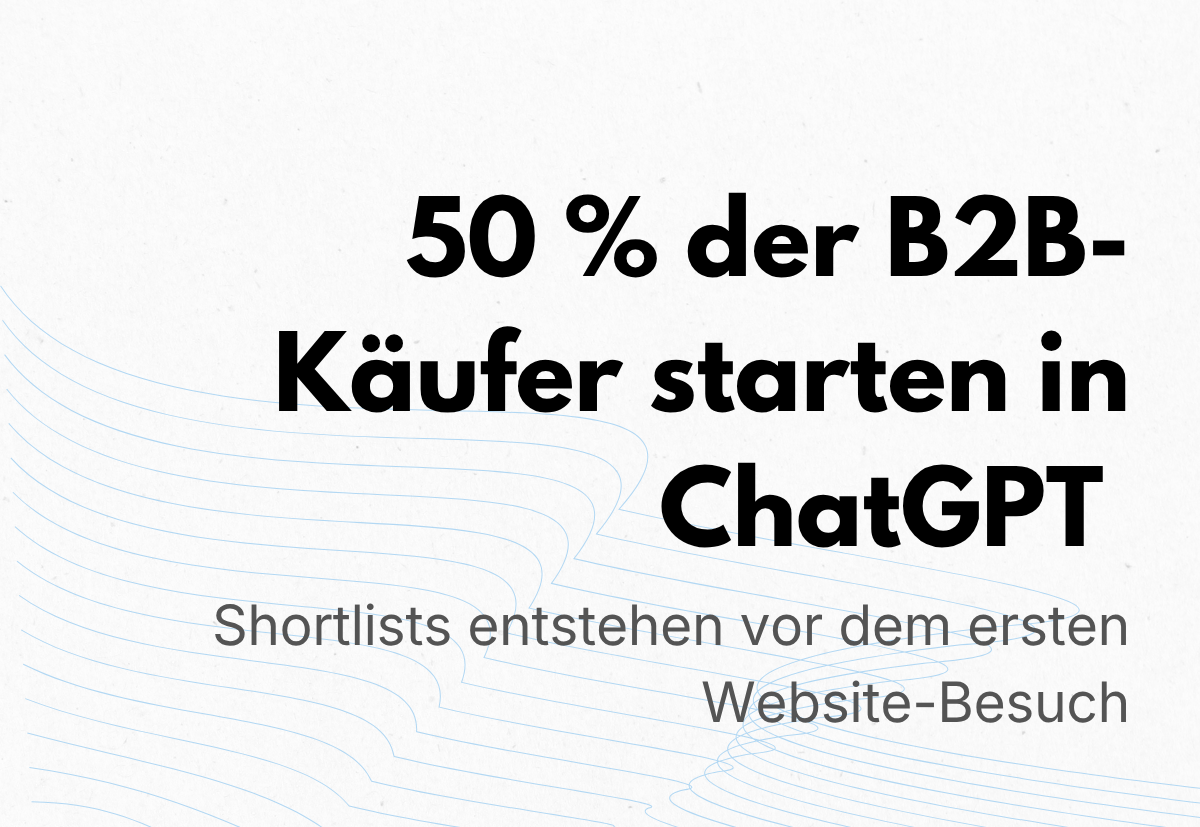
50 per cent of B2B buyers now start their research in AI chatbots rather than Google. Companies that don't appear there are filtered out of the buying process before their own website is ever visited.
A buyer is looking for an IT service provider for his company. He does not open Google — he opens ChatGPT and types: 'Which software agency for mid-sized businesses in Bavaria would you recommend?' Within seconds he receives three names, a brief overview, and concrete pointers to criteria relevant to his decision. The shortlist is complete — without a single company website having been visited.
What was a fringe phenomenon two years ago is everyday reality in the B2B buying process in 2026. According to the G2 Buyer Behavior Report 2025, 50 per cent of B2B software buyers already begin their research in AI chatbots rather than classical search engines. More significantly, the same study found that generative AI chatbots are now the single biggest influence on vendor shortlists — ahead of review platforms, company websites, and sales contacts.
When the Buying Process Starts in a Chat Window
ChatGPT has recorded more than 900 million weekly users since February 2026. In November 2025, OpenAI introduced a dedicated shopping feature: users describe products in natural language and receive direct recommendations with prices, reviews, and images — in some categories they can complete the purchase directly within the chat. This moved product queries that previously began on Google or Amazon into a conversational channel.
This fundamentally changes the entry phase of the buying process. According to an Eight Oh Two study, 37 per cent of consumers already start their search with an AI tool rather than Google — 47 per cent have used an AI tool at least once during a specific purchasing decision. Traffic arriving via AI recommendations converts above average: users who come through an AI recommendation have already made their initial selection — the website visit serves as confirmation, not discovery.
Three Consequences for Mid-Sized Businesses
- Visibility happens before the first click. Companies that don't appear in AI answers never make the shortlist — regardless of how good their website or product pages are. The competition for attention takes place in the language model, not on the search results page.
- Trust is built by third parties. AI systems preferentially cite sources considered authoritative: industry directories, specialist portals, editorial articles. Companies that communicate only through their own website are absent from exactly these sources.
- The buying process continues to accelerate. Analysis by 6sense shows that 80 per cent of B2B deals go to the vendor contacted first. Companies that appear on AI shortlists early enter the conversation sooner.
What Changes for Your Marketing Strategy
For mid-sized companies, this shift does not mean abandoning classical channels entirely. Google remains relevant: 85 per cent of users who first consult an AI tool then conduct a classical search to verify the answers. But the discovery phase — the moment when a supplier is even considered — increasingly takes place in a chat window.
A structured technology strategy today takes both channels into account simultaneously. In practical terms, this means content must be structured so that language models can understand, categorise, and cite it — clear structure, verifiable claims, external mentions in trustworthy sources. Which concrete steps work and how to measure your current AI visibility yourself is described in NoviCogi Technologie's guide to AI visibility for mid-sized businesses.
What You Should Check Now
- Self-test: Ask typical customer questions in ChatGPT, Gemini, and Perplexity. Do you appear? If not — which competitors are mentioned instead, and in which sources?
- External presence: Are you mentioned in industry directories, specialist portals, and editorial articles? These sources form the foundation for AI recommendations.
- Content structure: FAQ pages, clear service descriptions, and structured data help language models to correctly categorise your company.
- Regular monitoring: AI visibility changes when models are updated or new sources are incorporated. A monthly spot check reveals trends early.
Companies absent from AI answers are filtered out of the buying process before their own website is ever visited.
Many measures that strengthen AI integration and visibility are simultaneously sound digital practice that benefits classical SEO. The effort of starting now is manageable — the disadvantage of waiting grows with every month.